
Business Setup Singapore: Your 2026 Compliance Guide


Business setup in Singapore is the process of registering and legally establishing a company under the oversight of the Accounting and Corporate Regulatory Authority (ACRA), culminating in the issuance of a Unique Entity Number (UEN). Singapore consistently ranks among the world’s easiest places to do business, and the process reflects that reputation. Registration can complete in as little as 15 minutes for straightforward applications. The 2026 Corporate and Accounting Laws Amendment Act has raised the stakes for directors, making compliance knowledge non-negotiable from day one. This guide walks you through every stage of the Singapore business setup process, from choosing a structure to staying compliant after incorporation.
What business structures are available in Singapore?
The structure you choose determines your tax treatment, liability exposure, and ability to raise capital. Getting this decision right before you file saves significant time and money.
Singapore offers three primary structures for founders:
Private Limited Company (Pte Ltd). The most common choice for serious founders. Shareholders carry limited liability, meaning personal assets stay protected if the business fails. The Pte Ltd structure qualifies for all Singapore tax incentives, including startup exemptions and enhanced corporate tax rebates. It also supports multiple shareholders and is the preferred vehicle for investors.
Sole Proprietorship. Simple to register and low cost, but the owner carries unlimited personal liability. All business debts become personal debts. This structure suits freelancers testing a market, not founders building a scalable company.
Limited Liability Partnership (LLP). A middle ground between a sole proprietorship and a Pte Ltd. Partners enjoy limited liability, but the LLP does not qualify for the same tax incentives as a Pte Ltd. Professional service firms, such as law practices, commonly use this structure.
For most entrepreneurs, the Pte Ltd is the clear answer. It protects your personal assets, attracts investors, and unlocks Singapore’s full menu of tax incentives. Sole proprietorships and LLPs make sense only in narrow circumstances.
Pro Tip: Register as a Pte Ltd even if you plan to operate solo at first. Switching structures later triggers additional filings, fees, and potential tax complications. Starting right costs less than restructuring.

One underappreciated advantage of the Pte Ltd: 100% foreign ownership is permitted with no local partner required. Foreign founders hold the same equity rights as Singaporean citizens. That fact alone makes Singapore one of the most accessible jurisdictions in Asia for international entrepreneurs.
How do you complete the company registration process in Singapore?
Company registration in Singapore follows a defined sequence. Skipping steps or filing incomplete documents triggers delays and rejection.
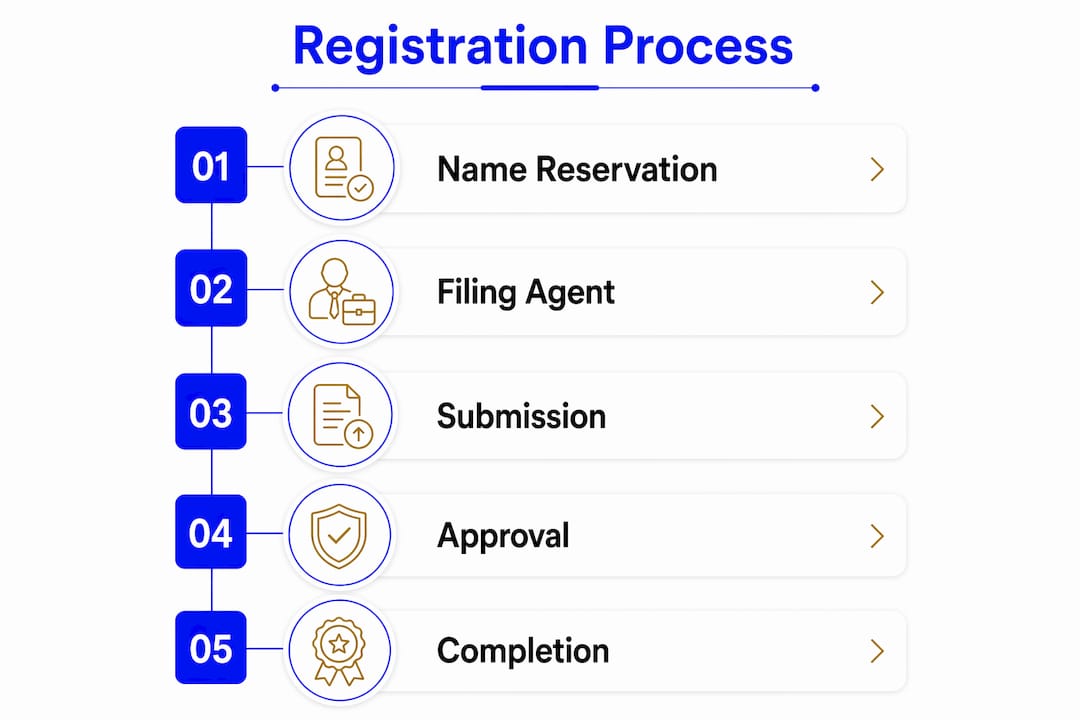
Reserve your company name. Submit your proposed name through BizFile+, ACRA’s online portal. ACRA checks for conflicts with existing names and prohibited terms. Approval typically arrives within an hour for standard names.
Prepare your incorporation documents. You need a company constitution (formerly called the Memorandum and Articles of Association), details of directors and shareholders, and a registered Singapore office address. A P.O. box does not qualify.
Appoint at least one resident director. Singapore law requires at least one resident director who is a Singapore citizen, permanent resident, or valid pass holder such as an EntrePass or Employment Pass. This director must be 18 or older.
Engage a registered filing agent if you are a foreigner. BizFile+ requires Singpass login, which is only available to Singapore residents. Foreign founders must use a registered filing agent, such as a law firm or corporate secretarial firm, to submit the application. The agent also verifies beneficial ownership as part of the legal process.
Pay the registration fee and submit. The incorporation fee is S$300. If ACRA does not flag the application for additional review, approval arrives within 15 minutes. That speed is not a typo. It reflects how seriously Singapore takes business formation efficiency.
Step | Action Required | Typical Timeline |
Name reservation | Submit via BizFile+ | Under 1 hour |
Document preparation | Constitution, director and shareholder details | 1–3 days |
Director appointment | Confirm resident director eligibility | Before filing |
Filing agent engagement | Required for foreign founders | Before filing |
Fee payment and submission | S$300 via BizFile+ | 15 minutes to approval |
Pro Tip: Choose your registered filing agent before you finalize your company name. A good agent reviews your name for potential ACRA objections before you submit, saving you the cost of a rejected application.
What post-registration steps keep your company compliant?
Registration is the starting line, not the finish. Singapore companies face a set of operational requirements that must be in place before trading begins.
Open a corporate bank account. You cannot mix personal and business funds legally or practically. Corporate bank accounts often require in-person verification, though digital banks now offer remote onboarding for Singapore-registered companies. Prepare your Certificate of Incorporation, company constitution, and director identification documents for the bank’s due diligence process.
Register for GST if required. GST registration is mandatory when your taxable turnover exceeds S$1 million in the past 12 months or is projected to exceed that threshold in the next 12 months. That threshold means most early-stage startups can defer GST registration, but you should monitor revenue closely as you scale.
Set up accounting and record-keeping systems. Singapore law requires companies to maintain financial records for at least five years. Cloud-based accounting software such as Xero or QuickBooks handles this well and produces the reports your auditor and tax agent will need.
Configure invoicing and payment infrastructure. Your invoices must include your UEN, company name, and GST registration number if applicable. Payment platforms that integrate with your accounting software reduce reconciliation errors and support accurate revenue tracking.
Appoint a company secretary. Every Singapore company must appoint a qualified company secretary within six months of incorporation. This person manages statutory filings, annual returns, and board resolutions.
Getting these systems in place within the first 30 days of incorporation prevents the compliance backlog that catches many founders off guard at their first annual filing.
What tax incentives apply to new Singapore companies?
Singapore’s tax framework is genuinely generous for new companies. Understanding the specific thresholds lets you plan your finances from the first year.
The Startup Tax Exemption applies to qualifying new companies for their first three years of assessment. It provides a 75% exemption on the first S$100,000 of chargeable income and a 50% exemption on the next S$100,000. That means a company earning S$200,000 in its first year pays tax on a fraction of that income. The savings are material for early-stage businesses managing cash flow.
The Enterprise Innovation Scheme (EIS) adds another layer of benefit. Companies can claim 400% tax deductions on qualifying AI-related expenditure of up to S$50,000. That deduction applies to qualifying research and development spending, including AI tools and innovation projects. For tech-focused founders, this scheme alone can offset a significant portion of early operating costs.
“The 2026 Corporate and Accounting Laws Amendment Act imposes stricter audit accountability and fiercer penalties for director breaches. Business owners must understand their statutory duties because increased penalties create costly risks if not properly managed from the start.”
The 2026 amendment is not a minor update. It signals that Singapore expects directors to treat compliance as a core responsibility, not an afterthought. Penalties for filing errors, late submissions, and audit failures have increased. Directors who delegate compliance entirely without oversight now face personal liability exposure they did not face before 2026.
Tax Benefit | Threshold | Rate |
Startup Tax Exemption (first tier) | First S$100,000 chargeable income | 75% exemption |
Startup Tax Exemption (second tier) | Next S$100,000 chargeable income | 50% exemption |
Enterprise Innovation Scheme | Up to S$50,000 qualifying expenditure | 400% deduction |
The combination of low headline corporate tax rates, startup exemptions, and innovation deductions makes Singapore’s tax environment one of the most founder-friendly in the world. Founders who understand these thresholds from day one build them into their financial models rather than discovering them at tax time.
Key Takeaways
A successful Singapore company setup requires choosing the right structure, completing ACRA registration correctly, and building compliant financial systems before you begin trading.
Point | Details |
Choose Pte Ltd for full benefits | The private limited structure unlocks all tax incentives and protects personal assets. |
Foreign founders need a filing agent | BizFile+ requires Singpass, so foreigners must engage a registered agent to incorporate. |
Registration can take 15 minutes | A S$300 fee and complete documents can yield ACRA approval in under 15 minutes. |
GST threshold is S$1 million | Monitor turnover carefully and register for GST before you breach the annual threshold. |
2026 compliance rules are stricter | The Corporate and Accounting Laws Amendment Act increases director penalties for filing errors. |
What I’ve learned from watching founders set up in Singapore
Most founders I’ve worked with underestimate two things: the speed of registration and the weight of post-registration obligations. They spend weeks preparing for the incorporation filing, then scramble when they realize the company secretary appointment, bank account setup, and accounting system all need to happen within weeks of receiving their UEN.
The 2026 regulatory changes have made this scramble more consequential. Directors who treat compliance as something to sort out “later” now face real financial penalties, not just administrative inconvenience. I’ve seen founders from markets like Paraguay, where company formation timelines and regulatory cultures differ significantly, arrive in Singapore expecting a slower, more forgiving process. Singapore rewards preparation and punishes assumptions.
My strongest advice: engage your filing agent and company secretary before you finalize your incorporation date. The best agents do more than file paperwork. They flag structural issues, advise on director eligibility, and set up your compliance calendar from day one. That investment pays back within the first filing cycle. Singapore’s startup ecosystem is genuinely exceptional, but it operates on the assumption that founders take their statutory duties seriously.
— Colin
How Headington supports your Singapore company setup
Setting up a company in Singapore involves more moving parts than most founders anticipate, especially with the 2026 regulatory updates now in effect.
Headington brings 25+ years of corporate and legal advisory experience across 90 countries to every Singapore engagement. The team handles the full incorporation process, from name reservation and filing agent services to director compliance and post-registration setup. Headington’s in-house experts understand ACRA’s requirements in detail and keep clients ahead of regulatory changes, including the 2026 Corporate and Accounting Laws Amendment Act. If you want your Singapore company set up correctly the first time, Headington is the right partner to call.
FAQ
What is the minimum capital required to set up a company in Singapore?
Singapore requires a minimum paid-up capital of just S$1 to incorporate a private limited company. There is no minimum capital threshold tied to business activity or sector for most industries.
Can a foreigner own 100% of a Singapore company?
Yes. Singapore permits 100% foreign ownership with no local partner required. Foreign founders hold the same equity rights as Singapore citizens.
How long does Singapore company registration take?
Registration through BizFile+ typically completes within 15 minutes if ACRA does not flag the application for additional review. Complex cases requiring ACRA scrutiny take longer.
When must a Singapore company register for GST?
GST registration becomes mandatory when taxable turnover exceeds S$1 million in the past 12 months or is expected to exceed that amount in the next 12 months.
Do I need a company secretary after incorporating in Singapore?
Yes. Every Singapore company must appoint a qualified company secretary within six months of incorporation. The secretary manages annual returns, statutory filings, and board resolutions.


Comments